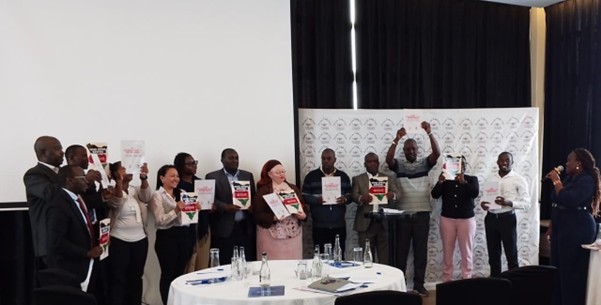
The Kenya Human Rights Commission has released two reports highlighting patterns of land ownership and rising public debt, warning that both issues continue to shape inequality in the country
The reports, launched on 3 December 2025, outline the distribution of land, the tax burden carried by low-income households, and the strain created by national borrowing. KHRC states that land remains the main store of wealth in Kenya, yet carries minimal taxation, allowing a small group of owners to hold large portions of productive land. The reports place the question of ownership at the centre of tax justice debates and frame land as the country’s most concentrated asset.
According to the findings, 98 per cent of farm holders operate on plots averaging 1.2 hectares, accounting for 46 per cent of farmed land. In contrast, 0.1 per cent of owners hold farms averaging 200 hectares and control 39 per cent of farmed land. The reports conclude that this pattern gives a small group control over land sizes that match the combined holdings of millions of small producers
KHRC notes that regions with high land concentration also record high poverty levels, including urban informal settlements, parts of the Coast, and the Rift Valley. The reports add that Kenya has more than 7,200 individuals with net worths above KES 129 million, with much of this wealth held in land and real estate that remains undertaxed. Weak valuation systems and outdated valuation rolls are cited as major causes of revenue loss.
The public debt section tracks a rise in borrowing from the 2019–2020 financial year through 2024–2025. Wage spending has fallen from 54.8 per cent to 41.8 per cent of the budget over the same period, but the state continues to spend KES 80 billion each month on salaries. The number of older persons enrolled in cash transfer programs increased to more than 1.25 million, while funding fell from KES 18 billion to KES 15 billion. Beneficiary numbers for orphans, vulnerable children, and persons with severe disabilities also increased over the same period.
KHRC representatives at the launch asked whether the tax system protects those with the least resources. They also raised concerns about Nairobi’s access to funds under devolution, noting gaps in allocations to the health sector.
Funyula MP Wilberforce Oundo Mudenyo told the forum that Kenya is borrowing heavily and said the public depends on parliament despite its limits. He urged the media to prioritise reporting on debt and land instead of focusing on political disputes. Manyatta MP Gitonga Mukunji questioned state management of debt and criticised the Social Health Authority, arguing that governance gaps continue to influence both land questions and the debt burden.
KHRC recommends that the state redefine land as a human right, tax land wealth, and create a complete geo-mapping and registration system to support equitable planning and revenue collection