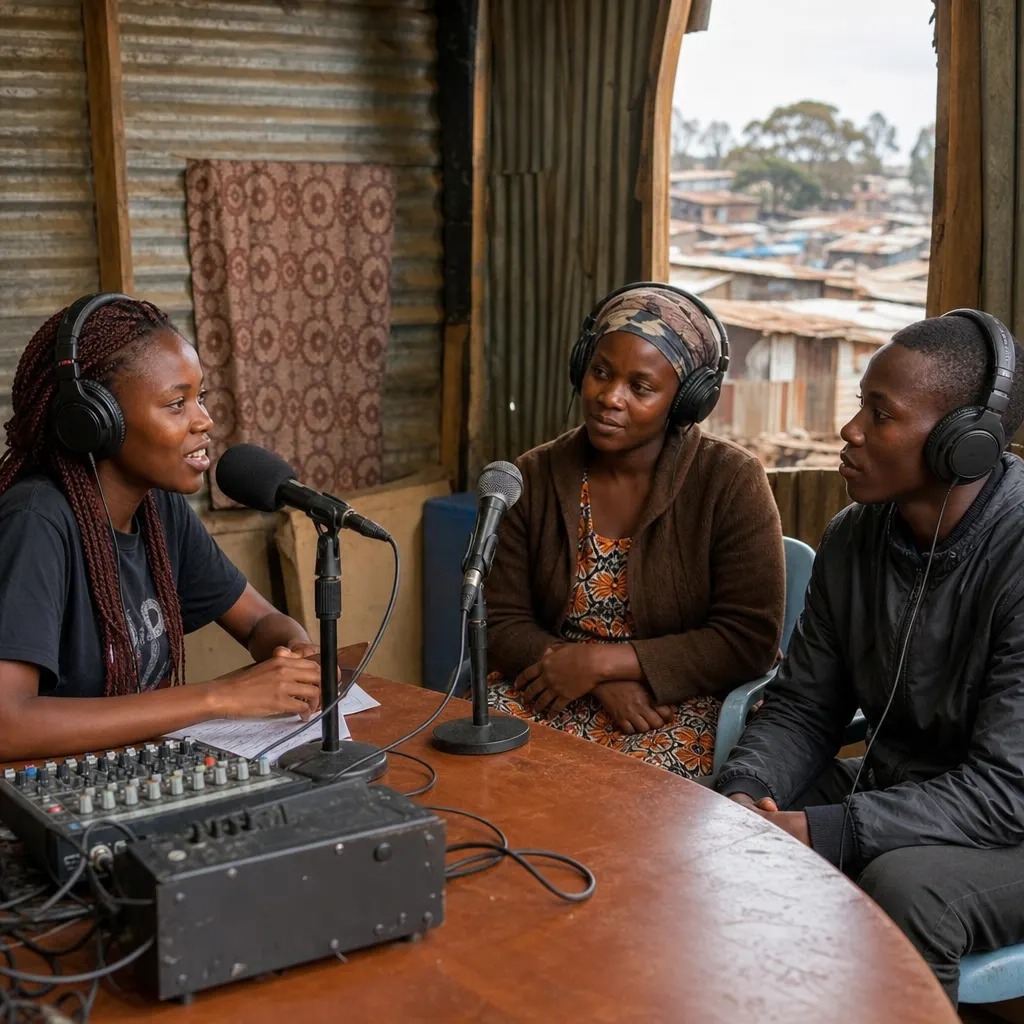
Community Voices Beyond the Live Broadcast
Pamoja is a Swahili word that means “together.” That idea guides the station’s role in Kibera and nearby communities. Pamoja FM was formed in 2007 to empower young people through education, information and entertainment. It also supports peace and community development.
Radio remains an important source of information in informal settlements. Many households have limited access to television, newspapers or the internet. A community station can discuss local concerns in familiar language and make public information easier to understand.
Podcasts extend that work beyond the original broadcast time. Listeners can choose a recording that matches their interests. They can pause when needed and return to an important point. A shared recording can also help a family, youth group or community organisation begin a wider discussion. For another perspective, see Fact Checking: Pause, Check, Then Share.
What You Can Listen For
The podcast page is a place for useful conversations rooted in community life. Topics may reflect the station’s core purpose, from access to information to peaceful dialogue. Each recording can offer context for an issue that matters to residents.
Listeners do not need specialist knowledge. The aim of community radio is to make public discussion open and understandable. A programme can explain a concern, present different views or highlight ways that residents are responding.
- Peacebuilding and respectful dialogue within the community
- Youth experiences, opportunities and local participation
- Education and information for everyday decisions
- Community development and neighbourhood concerns
- Culture, music and entertainment connected to local life
- Conversations that help residents understand current issues
Choose a Listening Approach
People use audio in different ways. Some want a short update. Others need a full discussion with more context. The right approach depends on your available time and the reason you are listening.
The comparison below can help you decide how to use a recording. It does not require special equipment beyond a device that can play the available audio.
| Listening approach | Useful for | Simple tip |
|---|---|---|
| Listen from start to finish | Understanding the full discussion | Choose a quiet time when possible |
| Pause and continue later | Longer programmes or limited time | Note where you stopped |
| Replay one part | Reviewing names, advice or key points | Move back to the start of the topic |
| Listen with others | Family, youth or community discussion | Talk about the main points afterward |
How to Get More from a Podcast
Active listening can make a programme more useful. You can focus on the main issue, the people affected and the ideas presented. It also helps to separate confirmed information from personal opinion.
When a recording covers health, safety, public services or another sensitive matter, check whether the information is still current. Local conditions can change after a programme is recorded. Use the podcast as a starting point and seek updated guidance from an appropriate local source when needed.
- Read the episode title or summary before you begin.
- Listen for the main question or community concern.
- Pause to note information that you want to remember.
- Replay any section that is unclear.
- Discuss useful points with family, friends or a local group.
- Check for newer information when the subject may have changed.
A Record of Community Life
A podcast archive can preserve more than news. It can hold local experiences, public discussions and ideas from different periods. These recordings help listeners understand what their community has faced and how people have responded.
For young people, community audio can show that local voices belong in public conversation. For residents outside Kibera, it can offer direct insight into issues that may receive little attention elsewhere. For regular listeners, it provides another way to stay connected to Pamoja FM’s work.
Choose a recording from the available podcast collection and listen at your own pace. Share useful episodes responsibly. A wider audience can help important community conversations continue. Explore more articles on pamojafm.co.ke.